


Timeform's Adam Houghton highlights five horses who produced notable performances in winning at Royal Ascot.
Subjectivist (Timeform rating 130) – Gold Cup
The performance Stradivarius produced to run out a 10-length winner of last year’s Gold Cup saw him lauded as the best horse over staying trips for almost 40 years on Timeform ratings. That makes it even more remarkable that, just 12 months later, we’ve already uncovered a horse of similar merit in the shape of Subjectivist, the latest winner of the biggest staying prize in the calendar.
Subjectivist had already shown himself to be the up-and-coming force in this division by winning his two previous starts either side of a five-month break. He made the breakthrough at the top level in the Prix Royal-Oak at Longchamp in October, making virtually all on heavy going to win by two lengths, before reappearing with a similarly dominant victory in the Dubai Gold Cup at Meydan in March, taking his form up another notch in winning by nearly six lengths.

Despite Subjectivist’s irresistible rise through the ranks, the build up to the Gold Cup still revolved around Stradivarius and his attempt to emulate Yeats by winning the race for the fourth year in a row. In the event, however, Stradivarius could never land a blow after suffering interference at a crucial stage of the race, briefly making some inroads once in the clear before his effort flattened out.
Subjectivist very much enjoyed the run of the race by comparison, but that shouldn’t detract from what was still a top-class performance in every sense. Produced to lead on the home turn, he proceeded to power clear in the straight to win by five lengths from Princess Zoe, impressing with his strength at the finish given how zestfully he went through the race on the heels of the front-running Amhran Na Bhfiann.
It’s far too soon to be writing off Stradivarius as a force at this level given how the race developed for him, but there is no doubt that Subjectivist will be the one to topple in this division from now on. The Goodwood Cup could provide the platform for the next clash between the pair – Stradivarius will be seeking his fifth win in that race, but Subjectivist lacks nothing in the way of course experience having won the March Stakes there by 15 lengths in August.
Poetic Flare (Timeform rating 128) – St James’s Palace Stakes
The St James’s Palace Stakes looked a wide-open contest on paper but proved far from it in the event, with Poetic Flare showing much-improved form to blow his rivals away, bouncing back (and then some) from a couple of soft-ground defeats since his victory in the 2000 Guineas.
Poetic Flare certainly wouldn’t have been an obvious candidate to advance his form quite so markedly as he did. After all, this was his fifth start in the space of 10 weeks and he had been beaten on the last two of them in the French and Irish equivalents of the 2000 Guineas. Even his Newmarket victory had been achieved by a narrow margin from Master of The Seas and Lucky Vega, seemingly showing very smart form but no more.

Master of The Seas was forced to miss Ascot due to injury, but Lucky Vega was in opposition once again and this time he simply couldn’t live with Poetic Flare. Never far away in a strongly-run race, Poetic Flare seemed much more in his comfort zone back on faster ground and showed an electric turn of foot after moving alongside the leader entering the final two furlongs, keeping going well to beat Lucky Vega by four and a quarter lengths.
The timefigure provides plenty of substance to the form and suggests Poetic Flare was full value for a borderline top-class performance. For context, his Timeform rating of 128 has been surpassed in the St James’s Palace by only Rock of Gibraltar (129 in 2002) and Shamardal (129 in 2005) since the turn of the century.
This win was as much testament to Poetic Flare’s constitution as it was his ability, something which should continue to stand him in good stead. The Sussex Stakes is likely to be next up on his busy schedule, which raises the prospect of a mouth-watering clash with the dominant older miler Palace Pier, who still sets the standard in this division despite not needing to be anywhere near his best in winning the Queen Anne Stakes earlier on the card.

Oxted (Timeform rating 126) – King’s Stand Stakes
The sprinting ranks received a major shake-up during Royal Ascot, albeit we already knew plenty about the winners of the two Group 1s not limited to three-year-olds. Dream of Dreams, for example, was winning the Diamond Jubilee Stakes at the third attempt after a couple of misses, proving at least as good as ever at the age of seven but obviously unlikely to be getting any better.
Dream of Dreams might not have shown us anything new about him, but Oxted did to some extent. Admittedly, he didn’t need to improve on his July Cup-winning form of last year to regain the winning thread in the King’s Stand Stakes, but his performance did add another string to his bow in that he proved himself fully effective over a strongly-run five furlongs.

In truth, the words ‘strongly-run’ don’t even do justice to the way the King’s Stand was run, with the likes of Que Amoro, Glamorous Anna, Maven, Winter Power and Battaash all wanting a piece of the early action, ensuring there was absolutely no let-up in the gallop. Oxted benefited from being ridden with more restraint under such circumstances, staying on to lead inside the final 100 yards and ultimately well on top at the finish as he beat Arecibo by a length and three quarters.
Oxted had struggled in the main since his July Cup victory, but this was much more like it, putting up an effort which will guarantee he returns to Newmarket as a leading player once again. A Timeform rating of 126 certainly sets the standard amongst the older horses, just ahead of Dream of Dreams (125) and Starman (124), and the biggest danger to him defending his crown will perhaps rest with a promising crop of three-year-olds…
Rohaan (Timeform rating 124) – Wokingham Stakes
Three-year-olds have won four of the last six renewals of the July Cup, with three of those winners obliging after contesting the Commonwealth Cup on their previous start. It’s inevitable that people will look to that race when trying to identify members of the classic generation who can make an impact against their elders, but this year it could be worth focusing on a horse who has already done that in the Wokingham, one of the most competitive sprint handicaps of the entire season.
The horse in question is Rohaan, who has found remarkable improvement since making a successful handicap debut from a BHA mark of 55 at Kempton in December. He had already shown smart form when winning his last two starts in pattern company against his own age group, namely the Pavilion Stakes over the same course and distance as the Wokingham and the Sandy Lane Stakes at Haydock.

The strength of that form saw him line-up in the Wokingham from a BHA mark of 112, but even that wasn’t enough to prevent him from completing the hat-trick. He dwelt at the start and was briefly outpaced, but it was impossible not to be struck by how well he picked up late on, doing so in the style of a Group 1 sprinter as he got up to land the spoils by a neck.
A Timeform rating of 124 more than backs up the visual impression he created. For context, he is ranked comfortably superior to the pair who fought out a thrilling but controversial finish to the Commonwealth Cup, Campanelle (117) and Dragon Symbol (120), suggesting he would have won that Group 1 but for the rule which prevents geldings from taking part.
There are no such conditions in place for the July Cup and Rohaan will be well worth supplementing for that prestigious prize on this evidence. He adds further intrigue to a division which looks to have more depth to it than it has for several years, with the Jersey Stakes winner Creative Force (118p), another gelding, also likely to be bound for Newmarket.

Wonderful Tonight (Timeform rating 121) – Hardwicke Stakes
Admittedly, there were other horses who produced better performances during the week than the Hardwicke winner Wonderful Tonight. She didn’t even put up the best performance by a four-year-old filly given that Love, who was also returning from a long absence, ran to a Timeform rating of 123 when winning the Prince of Wales’s Stakes, making it four Group 1 wins in a row in the process.
However, the main difference between those two horses is that Love didn’t need to improve on the form she had shown previously to prevail, whereas Wonderful Tonight’s victory in the Hardwicke represented another step up the ladder on ratings, producing a statement performance to announce herself as a serious contender for Group 1 honours this season.
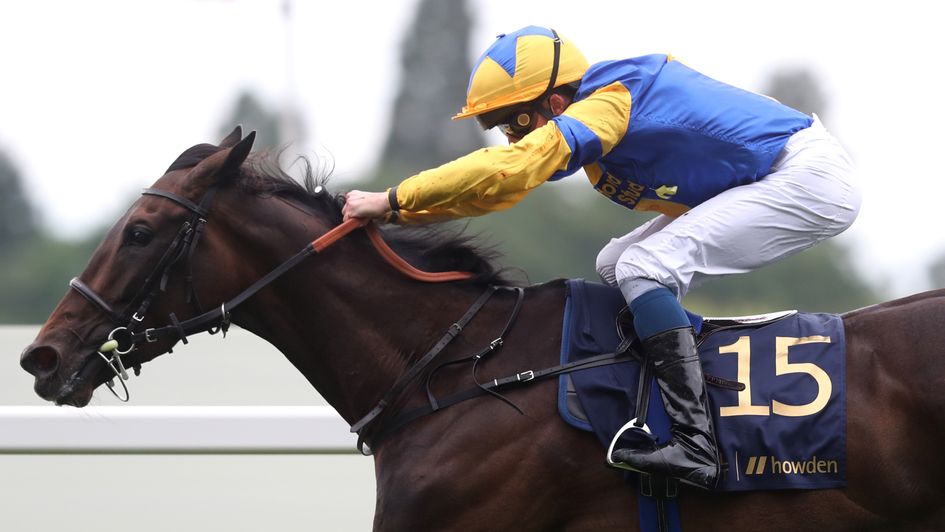
Of course, that might sound a strange thing to say about a horse who is already a two-time Group 1 winner after landing the Prix de Royallieu at Longchamp and the Fillies’ & Mares’ Stakes at Ascot on her final two starts of 2020. It’s fair to say that neither of those races took as much winning as the Hardwicke did, though, and this defeat of the boys provides proof that trainer David Menuisier’s long-held Arc aspirations are by no means fanciful.
Settled just behind the leaders in the early stages, Wonderful Tonight really impressed with the way she took control of the race after being produced to lead over two furlongs out, quickly moving into an unassailable lead. Broome began to close late on but could never lay a glove on Wonderful Tonight, who passed the post with a length and a half to spare.
All roads now lead to Longchamp, though it remains to be seen which route she'll take between now and then given her preference for plenty of cut in the ground. Wherever she goes she shouldn’t be underestimated, with her new Timeform rating of 121 putting her among the upper echelon of middle-distance fillies in Europe.


