


Adam Houghton reveals how Aidan O’Brien’s eight Derby winners compare based on Timeform ratings.
Ruler of The World (2013) – Timeform rating 121
Ruler of The World proved fittingly named on the first Saturday in June in 2013, even if the Derby that year didn’t take as much conquering as is often be the case. In fact, Ruler of The World is not only the lowest-rated of Aidan O’Brien’s eight Derby winners but also the winner of one of the weakest renewals of the race this century, with only Sir Percy (119 in 2006) ranking lower during that period.
It was a muddling race which developed into a sprint finish, with the 2000 Guineas winner and short-priced favourite Dawn Approach already well beaten by then after refusing to settle over the markedly longer trip. Ruler of The World stayed on strongly after hitting the front entering the final furlong to land the spoils by a length and a half, but the first five were covered by a little over two lengths, which made it difficult to take a high view of the form.
Ruler of The World did achieve a higher rating later in the season, when beaten less than a length into third in a top-class renewal of the Champion Stakes, but he is unlikely to be remembered as a ‘great’ Derby winner. Perhaps his biggest claim to fame is being only the fourth horse since World War II to win the Derby after being unraced as a two-year-old, with his Epsom victory being preceded by wins in a maiden at the Curragh and the Chester Vase.
Serpentine (2020) – Timeform rating 122
The 2020 Derby was different to just about every other in history, with the Covid-19 pandemic causing it to be staged four weeks later than scheduled and in front of empty stands. At least some sort of normality was expected to return once the stalls opened, and in many ways it did.
It was certainly no surprise to see an outsider from Ballydoyle making the running, while it wasn’t unexpected that the winner would also be trained by O’Brien, in the process providing him with his record-breaking eighth success in the race. However, the fact that the identity of the front-runner and the eventual winner was the same did give cause for surprise, with ‘pacemaker’ Serpentine making just about every yard of the running to win by five and a half lengths just seven days after his maiden victory at the Curragh.
Many people dismissed Serpentine’s win as a fluke and, while Timeform were prepared to give him the benefit of the doubt – he was initially rated an up-to-scratch winner of the race – subsequent events have reinforced the view that he might not be as good as the bare form would suggest. After all, he has failed to win in three subsequent starts and produced a laboured effort when down the field on his reappearance in the Tattersalls Gold Cup.
Wings of Eagles (2017) – Timeform rating 123
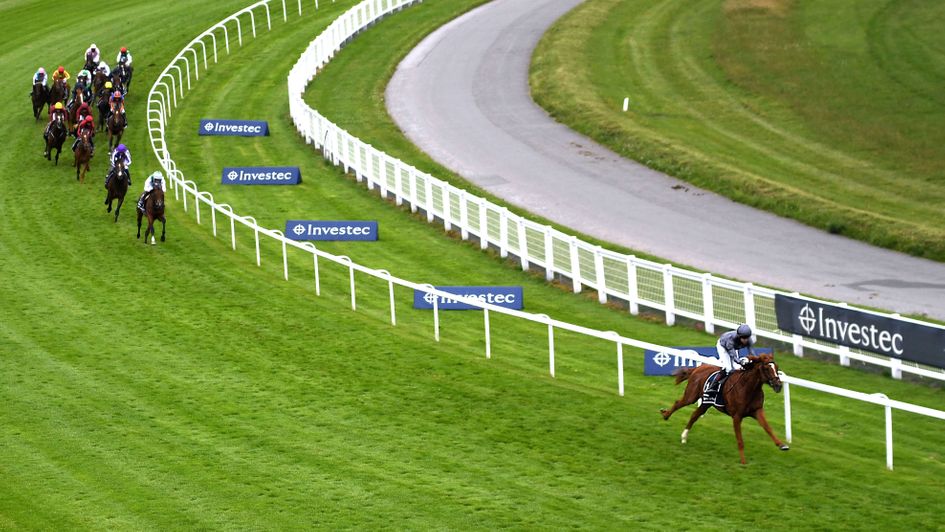
A total of 18 runners – six of which were trained by O’Brien – went to post for the 2017 Derby, the joint-largest field since Kris Kin beat 19 rivals in 2003. Wings of Eagles was unconsidered in the betting beforehand having finished only second in the Chester Vase on his previous start, but he clearly found plenty of improvement for the increased emphasis on stamina in a race run at a fierce gallop, winning in a style very reminiscent of his sire Pour Moi as he swept past stablemate Cliffs of Moher close home.
Wings of Eagles, a 40/1 shot, became the longest-priced winner of the Derby since 1974 when Snow Knight defied odds of 50/1. It was hard to argue that Wings of Eagles was anything more than an average winner of the Derby, though, especially as less than two lengths covered the first four past the post. Sadly, he didn’t get the opportunity to prove whether that was the limit of his ability, either, as he suffered a career-ending injury when third on his next start in the Irish Derby.

Anthony Van Dyck (2019) – Timeform rating 123
O'Brien exercised even more of an iron grip on the 2019 Derby than he done two years earlier, saddling seven of the 13 runners after dominating the key trials in Britain and Ireland. The race itself wasn’t entirely conclusive, producing an unusually tight finish, only Pour Moi and Sir Percy having won by a narrower margin this century.
Anthony Van Dyck, who was the third choice of the Ballydoyle runners in the betting after winning the Lingfield Derby Trial, produced a storming run up the rail to get the verdict by half a length, but it was a close-run thing for second with four horses involved in a photo. Remarkably, three of them – Japan (third), Broome (fourth) and Sir Dragonet (fifth) – were also trained by O’Brien along with the sixth-placed Circus Maximus.
The narrow margins involved at the finish suggested the principals were all much of a muchness and Anthony Van Dyck was rated as just an average Derby winner as a result, though the O’Brien-trained runners who made the frame all showed themselves to be capable of at least very smart form subsequently.
Anthony Van Dyck himself failed to win again as a three-year-old but took his form up another notch when returning the following year, producing high-class performances to fill the runner-up spot in both the Coronation Cup and Caulfield Cup. He sadly suffered a fatal injury in last year’s Melbourne Cup.

Camelot (2012) – Timeform rating 128
The 2012 Derby lacked depth with only nine runners going to post, the smallest field for the race since 1907. Nevertheless, the winners of the key British trials were all present, Main Sequence (Lingfield Derby Trial), Bonfire (Dante Stakes), Mickdaam (Chester Vase) and Astrology (Dee Stakes) all taking their chance against the 2000 Guineas winner Camelot, whom the race had revolved around ever since his victory in the previous year's Racing Post Trophy.
In a trouble-free Derby, run at a sound gallop, Camelot justified odds-on favouritism in the style that was anticipated, producing a top-class effort to pull five lengths clear of Main Sequence. An excellent timefigure added substance to Camelot’s impressive display and helped to identify him as an above-average winner of the race, joining the likes of Nijinsky, Nashwan and Sea The Stars on the list of colts to have won both the Guineas and Derby.
It also set him on a path towards a clean sweep of the classics and the Triple Crown but, following a workmanlike victory on soft going in the Irish Derby, he then suffered a surprise defeat at odds of 5/2-on in the St Leger. In truth, Camelot failed to scale the heights in his career that might have been expected given the manner of his Epsom success – he added only one more win to his tally in a Group 3 on his return as a four-year-old – but he has since redeemed his reputation with a successful career at stud.
Incidentally, Sir Lamorak and Youth Spirit are amongst those who will attempt to give Camelot his first Derby winner as a sire in this year’s renewal.
Australia (2014) – Timeform rating 129
Australia was one of the star names amongst an exceptionally strong crop of three-year-olds in 2014, along with the pair who beat him into third in the 2000 Guineas, Night of Thunder and Kingman, and fellow classic winners The Grey Gatsby (Prix du Jockey Club) and Kingston Hill (St Leger).
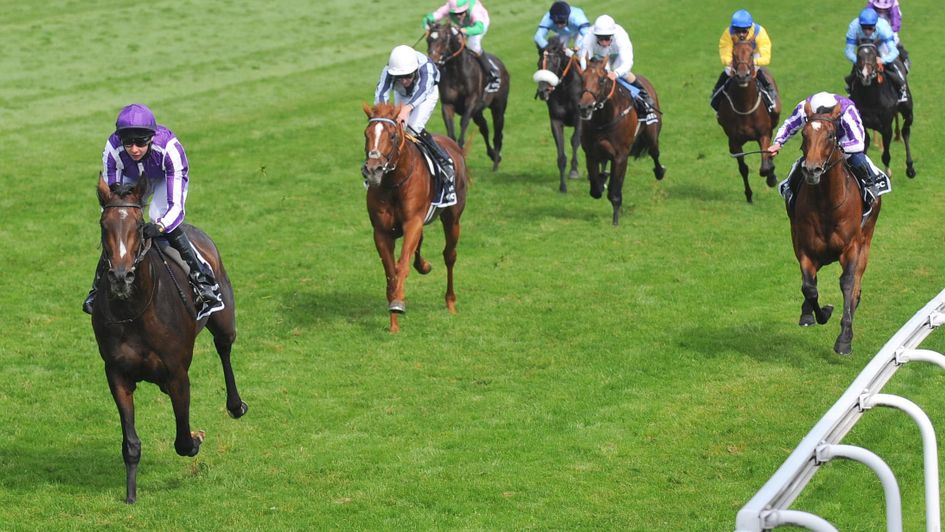
Australia, of course, enjoyed the biggest day of his career when emulating both his sire Galileo and dam Ouija Board with a classic victory at Epsom, justifying his lofty reputation (sent off the 11/8 favourite) by winning in comfortable fashion. Settled in mid-division in the early stages, he was always tanking along and just needed to be kept up to his work after being produced to lead over a furlong, maybe even idling a shade but always doing enough to beat Kingston Hill by a length and a quarter.

That performance was good enough to ensure that Australia was rated higher than average for a Derby winner, running to a level which only Workforce (132 in 2010) and Golden Horn (132 in 2015) have bettered in winning the race since 2010. Australia took his form to another level later in the season, too, recording a straightforward success in the Irish Derby before producing a career best to beat The Grey Gatsby in the Juddmonte International.
Admittedly, those placings were reversed on his final start in the Irish Champion Stakes, but Australia could be counted an unfortunate loser after forfeiting ground by racing very wide throughout, and he has since enjoyed plenty of success as a sire. His best progeny include Broome, who was beaten only narrowly in the 2019 Derby, and last year’s St Leger winner Galileo Chrome.
High Chaparral (2002) – Timeform rating 130
O’Brien-trained runners filled the first two places in the betting for the 2002 Derby, though it proved difficult during the spring to predict who would occupy the top spot. High Chaparral briefly held that position after his wins in the Ballysax Stakes and Derrinstown Stud Derby Trial, but neither of his three-year-old performances created anything like the impression his stablemate Hawk Wing made when second in the 2000 Guineas. Once Hawk Wing was announced a definite Derby runner, he went back to the head of the ante-post betting.
With stable jockey Mick Kinane choosing to ride Hawk Wing, the mount on High Chaparral went to Johnny Murtagh, who described afterwards how stamina was always going to be the key to beating Hawk Wing. The good to soft going, coupled with a very strong pace in the first half mile, certainly ensured that the Derby developed into a thorough test and played into the hands of High Chaparral.

Rounding Tattenham Corner, Murtagh set his mount alight with a couple of cracks of the whip, passing Hawk Wing and eventually overtaking the front-running Moon Ballad approaching the two-furlong marker. High Chaparral kept on strongly under pressure in the lead as Hawk Wing briefly drew almost upsides over a furlong out. But, when the crunch came, it was High Chaparral who had the answers. He was well on top at the line andhad two lengths to spare over Hawk Wing, with 12 lengths back to the very tired Moon Ballad.
The domination of High Chaparral and Hawk Wing made O'Brien the first trainer for over half a century to send out the first and second in the Derby at Epsom, a feat he repeated with Wings of Eagles and Cliffs of Moher in 2017. The distance the first two pulled clear of the rest suggested they were both full value for at least high-class form on the day, top-class in the case of High Chaparral, who was a brilliant Derby winner and continued to take plenty of beating during the rest of his career. He retired as the winner of 10 of his 13 starts, including back-to-back renewals of the Breeders’ Cup Turf.
Galileo (2001) – Timeform rating 132
Only 12 runners went to post for the 2001 Derby – the smallest field for the race at that time since Nashwan was successful in 1989 – but it was still a strong renewal featuring an eagerly-anticipated clash between the 2000 Guineas winner Golan and chief Irish hope Galileo, who had laid the path stable-companion High Chaparral would follow 12 months later by winning both the Ballysax Stakes and Derrinstown Stud Derby Trial. Several of the key trial winners in Britain were thrown in for good measure, but they hadn’t done enough to dislodge Golan and Galileo from the head of the Derby betting, the pair starting 11/4 joint favourites on the day.
In the event, however, Galileo was quite simply a class apart. The pace steadied soon after the scramble for early positions, picking up again just before Tattenham Corner, and, effectively, it developed into a test of speed up the straight. Galileo moved smoothly just behind the leaders on the outside, tracked by Golan, and was perfectly poised rounding Tattenham Corner.
As soon as he was fully opened out in the straight, Galileo produced a devastating burst which took him to the front with over two furlongs still to go. Storming clear, he was never in the slightest danger afterwards and passed the post, his rider easing up, three and a half lengths ahead of Golan. The timefigure Galileo recorded was a very good one given how the race developed, too, and confirmed that he was full value for a top-class performance, one which hasn’t been surpassed in the Derby in the 20 years since.
O’Brien’s first Derby winner was also his best, but Galileo’s significance to everyone involved with him runs much deeper than that through his record-breaking exploits as a sire, arguably surpassing anything he did on the racecourse, a career which also included wins in the Irish Derby and King George.
John Ingles documented in more detail Galileo’s remarkable association with the Derby but, to sum up, he is already the sire of five winners – including four of those we’ve already discussed, Ruler of the World, Australia, Anthony Van Dyck and Serpentine – while his grandson Masar (by Galileo’s other Derby winner New Approach) was also successful in 2018.
Remarkably, Galileo appears in the pedigrees of the top six in the ante-post betting for this year’s renewal, including as the sire of Bolshoi Ballet, who is a hot favourite to supply O’Brien with his ninth Derby winner after following the High Chaparral/Galileo route with wins in both the key spring trials at Leopardstown.


