


A growing rabble of pundits have taken to TV studios and podcasts to declare English football has become boring.
It’s the best evidence we’ve got that the Premier League is the healthiest it’s been in a decade.
The way people digest football, and the tone and content of debate, changed dramatically over the last ten years as the newspapers lost influence and the ex-pros on TV coverage, podcasts, and social media grew in stature.
That is no bad thing: there is plenty of nuanced opinion among the pundit class and it’s to the credit of Gary Neville and friends that their insights now inform the wider discourse. A lot of it is substantially better than what you used to read on the back pages.
But their allegiances to the big clubs means their views are unconsciously refracted through a lens that tends towards the conservative; towards the consolidation of power and influence.
This week’s ongoing debate around “robotic” possession football is a perfect example. Former players are looking (and feeling) too closely at their own clubs, taking out their irritations about Manchester United’s soulless football or Arsenal’s blunt attack or Pep Guardiola’s Manchester City wobble on the league as a whole.
For the rest of us, this is good news. It shows us the ‘Big Six’, the old aristocracy, is beginning to crumble.
In the five seasons between 2014 and 2019 the ‘Big Six’ all finished in the Premier League’s top six positions on four occasions, the only exception being when Leicester won the title in 2015/16.
Since then, it’s happened just once in six years, with the 2024/25 season set to be the third in a row when at least one outsider has gate-crashed not just the top six but the top four.

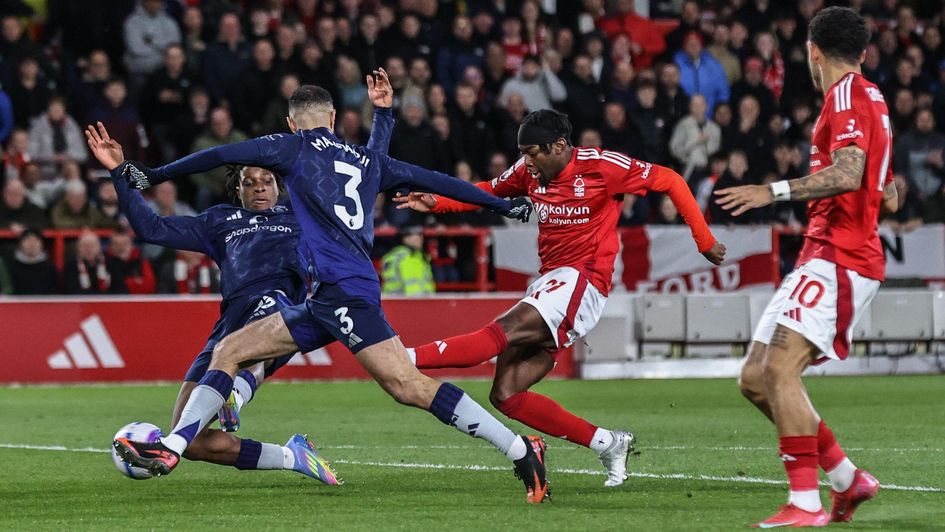
Nottingham Forest will likely join Aston Villa (23/24) and Newcastle (22/23) in snatching Champions League money away from the ‘Big Six’, helping to redistribute wealth in a division that, against all odds, is tending towards more financial equality.
For that we can thank the Profit & Sustainability Rules (PSR), a surprise success that, having survived dishing out points deductions to its member clubs, appears to be holding its ground.
It hasn’t levelled the playing field (bigger stadiums and greater commercial appeal still gives the ‘Big Six’ an advantage, as will circumventing PSR by selling assets to themselves) but there’s no doubt their power has waned, so much so that it’s now possible to imagine clubs like Aston Villa or Newcastle climbing right to the top of the English game.
And that’s not just because the middle-class is rising. The ruling class also seem strangely overwhelmed by their own financial heft.
The longer Man Utd and Tottenham spend outside the Champions League the more they become stuck between two markets, unable to gamble on up-and-comers but never first choice for the ready-made players who can lift them back up.

Meanwhile, and not unrelated to the unwieldy size of United and Spurs, Chelsea continue to flounder with a billionaire’s strategy.
That gives the next rung down from the ‘Big Six’ the opportunity to build more organically and, using the odd Champions League run, begin challenging the status of the supposedly ring-fenced group of super-clubs.
The scales are tipping, and that’s before you get to the impending outcome of Manchester City’s alleged rule-breaking. They strongly deny the charges, but if City are found guilty it might just upend the entire hierarchy.
Indeed if City are given a points deduction, and if Chelsea continue to fall apart under Enzo Maresca, three of the five English clubs receiving the Champions League windfall next season will be from outside the ‘Big Six’.
That would be irrefutable evidence the supremacy of the ‘Big Six’ is under threat. Not that we need it.
The tectonic plates are shifting, whether the TV pundits like it or not.
More from Sporting Life
Safer gambling
We are committed in our support of safer gambling. Recommended bets are advised to over-18s and we strongly encourage readers to wager only what they can afford to lose.
If you are concerned about your gambling, please call the National Gambling Helpline / GamCare on 0808 8020 133.
Further support and information can be found at begambleaware.org and gamblingtherapy.org.


